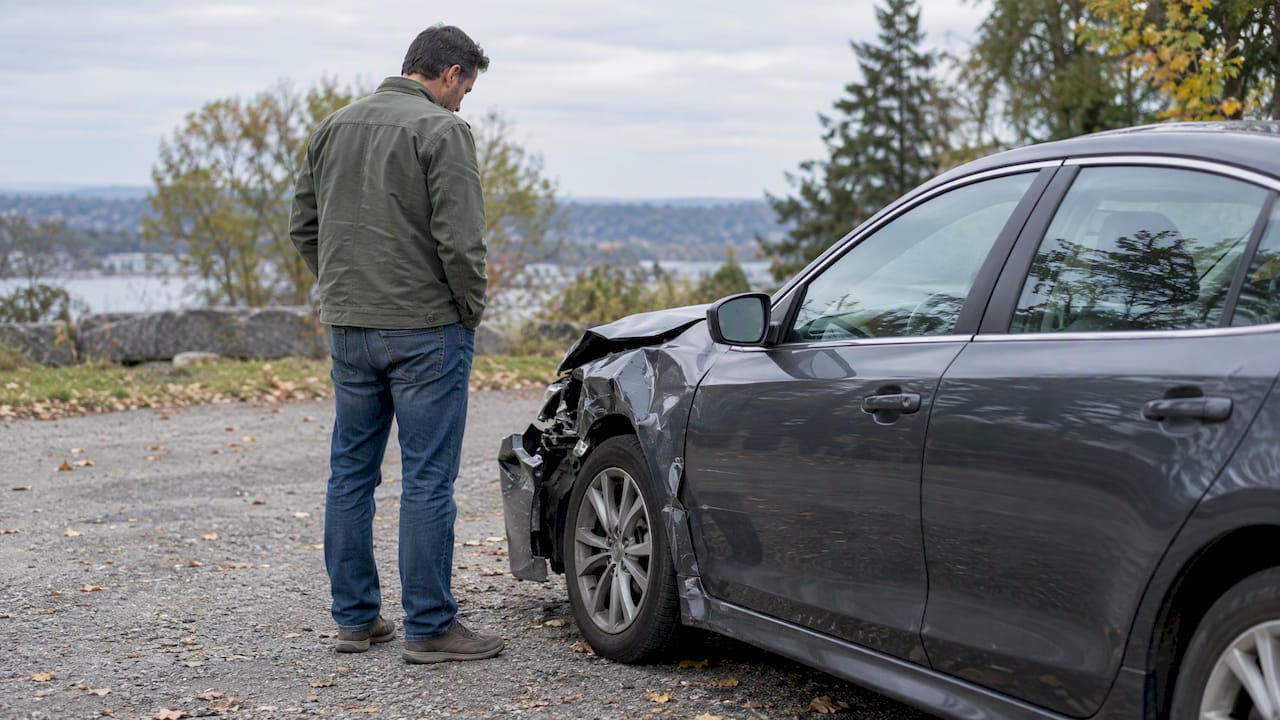
Your car is declared a total loss when your insurer decides that fixing it costs too much compared with what the car was worth just before the damage. Insurers often draw that line somewhere between 70% and 80% of the vehicle’s value, but the decision is about money, not about whether the car can physically be fixed. Which outcome is better for you depends on the car’s value, your loan balance, the repair estimate and the deductible you still owe either way.
This guide walks through how the call is made, what you are paid in each case, where drivers get shortchanged, and how to handle the deductible when money is tight.
TL;DR
- A total loss means repair costs (sometimes plus salvage value) are too high relative to the car’s actual cash value (ACV). Insurers commonly use a threshold of roughly 70% to 80% of ACV.
- In a total loss you are paid the value of a comparable vehicle minus your deductible. In a repair, you pay the deductible to the shop and the insurer pays the rest.
- You can challenge a low valuation with your own listings for comparable cars, and you should not sign a final settlement before you know the full extent of the damage.
- The deductible is owed in both outcomes, so plan for it early. If it is out of reach, assistance may be available.
Table of Contents
- What “total loss” actually means
- How the decision is made, step by step
- Total loss vs repair: how the two outcomes compare
- What a total loss payout should include
- When repair is the better choice
- When a total loss is the better outcome
- Can you keep a totaled car?
- What to do if you think the valuation is too low
- The deductible problem in both outcomes
- Our perspective
- Help with the deductible, whichever way your claim goes
- A quick checklist before you decide
- FAQ
- Sources
What “total loss” actually means
A total loss is an insurance decision, not a mechanical verdict. The California Department of Insurance explains that an insurer generally pays the lesser of the cost to repair the car or its actual cash value, and that when repair costs exceed, or come within a certain percentage of, the ACV, the insurer may declare the car a total loss. The same guidance says the percentages insurers set for this generally run from 70% to 80% of ACV, and that ACV is the fair market value of the car.
That is why a ten-year-old sedan with a crumpled quarter panel can be totaled while a newer truck with worse-looking damage gets repaired. The question is the ratio of repair cost to value, not how bad the photos look.
A few points follow from this:
- Salvage matters. Insurers can sell a wrecked car at auction, so paying out the value and recovering part of it through salvage can be cheaper than a complicated, risky repair.
- The threshold is not one number. Insurers set their own percentages, and states differ. California, for example, uses a repair-versus-value test rather than one fixed percentage for every claim, so the same damage can lead to different outcomes with different companies or in different states.
- Hidden damage changes the math. An estimate written from an initial inspection can grow once a shop takes the car apart. The California Department of Insurance notes that an adjuster or appraiser usually inspects the car and writes an estimate, and that further damage found later is handled through a supplement to that estimate. A car that starts as a repair can tip into a total loss.
How the decision is made, step by step
- You report the claim under your collision coverage (or comprehensive, for vandalism, weather, fire, theft or animal strikes).
- An adjuster inspects the car. According to the NAIC, the insurer assigns an adjuster, who may be an employee or an independent contractor, to assess the damage and determine the payment.
- The insurer values the car. It looks up what comparable vehicles sell for in your area, adjusting for mileage, trim and condition.
- The insurer compares repair cost to value. If the estimate crosses its threshold, you get a total loss offer. If not, you get a repair authorization.
- You respond. You can accept, negotiate the valuation, or, if you disagree with the whole determination, ask for further review.
You are allowed to ask the adjuster for the repair estimate, the valuation report and the list of comparable vehicles. Ask for them in writing. They are the raw material for any negotiation.
Total loss vs repair: how the two outcomes compare
| Repair | Total loss | |
|---|---|---|
| Who gets the money | Usually the shop, with you paying your share | You (and your lender first, if you have a loan) |
| What you pay | Your deductible | Your deductible is subtracted from the payout |
| What you keep | Your car | Nothing, unless you keep the car and accept a reduced payout |
| Loan impact | Loan continues as before | Payout goes to the lender first; you may still owe the difference |
| Future resale | May carry a repair history | A rebuilt car may carry a salvage brand |
| Time | Days to weeks, depending on parts and shop schedule | Valuation and paperwork, then you shop for a replacement |
The deductible row is the one drivers miss. A total loss does not wipe out the deductible. Under California’s claim rules, the insurer may elect a cash settlement based on the actual cost of a comparable automobile less any deductible in the policy. Other states have their own rules, so check your state’s insurance department.
What a total loss payout should include
The headline number is ACV, but the settlement is more than a sticker price. In California, the regulation says the cash settlement includes applicable taxes and one-time fees tied to transferring ownership of a comparable car, plus license and other annual fees based on the remaining registration term. If you keep the car, the rules treat sales tax differently, so ask the adjuster to show how the figure was built.
If you do not live in California, do not assume the same line items. Many states require insurers to include sales tax and title fees, but the details vary. Your state insurance department’s website is the place to confirm.
If you owe more than the car is worth
Car loans often run ahead of depreciation, especially in the first years. If the payout is smaller than the balance, you are responsible for the gap unless you bought GAP coverage. The Consumer Financial Protection Bureau describes GAP as an add-on product that covers the difference between what you owe and what the insurer pays when a car is stolen, damaged or totaled.
Two practical follow-ups:
- Call your lender as soon as the car is declared a total loss and ask whether you have GAP and how to file.
- If you paid off the loan early because of the payout, you may be due a refund of unused add-on premium. The CFPB has flagged that servicers sometimes handle add-on charges poorly when a loan ends early, so it is worth asking in writing rather than waiting for a check.
When repair is the better choice
Repair usually wins when:
- The car is worth more to you than the market says. A well-maintained, paid-off car with low mileage is hard to replace for the same money.
- The payout would not buy a comparable car. In a tight used-car market, ACV can lag behind what you would actually pay for a replacement.
- You owe little or nothing on it. With no loan, there is no gap problem and no lender to satisfy.
- Damage is cosmetic or bolt-on. Bumpers, lights, glass and panels are expensive but do not make a car unsafe.
- You rely on a specific car, for example, one modified for accessibility.
Before choosing, get the repair estimate in writing from a shop you trust, and ask whether the insurer will cover structural measurements and any manufacturer-required procedures.
When a total loss is the better outcome
A total loss can work in your favor when:
- Repairs would be extensive and uncertain. Frame damage, airbag deployment and electrical problems can keep surfacing for months.
- The car is old and the payout is fair. A check that lets you replace it with something newer beats sinking money into aging parts.
- You have GAP coverage and a loan that is underwater.
- The car was flooded. Water damage tends to show up later in mechanical and electrical systems. The U.S. Department of the Interior warns that such problems may not appear for weeks or months and that it can be very hard to get more money once you sign a final settlement.
That warning applies beyond floods. Whatever the cause, read any release form carefully before signing, and make sure the car has been fully inspected.
Can you keep a totaled car?
Often yes. This is called owner retention. The insurer pays the ACV minus the deductible and also minus the salvage value, and the car is typically branded salvage. You then need to repair it and pass the state’s inspection to get it back on the road. Rules differ by state. In California, the process involves specific paperwork and DMV steps, which we cover in our guide to California salvage title rules and the receipts that prevent DMV delays.
Keeping a totaled car makes sense for a skilled DIY owner or someone with a trusted body shop. It rarely makes sense if you need the car quickly or plan to sell it soon, because a salvage or rebuilt brand usually lowers resale value and can make it harder to insure fully.
What to do if you think the valuation is too low
Many drivers do not realize they can dispute a total loss value. The California Department of Insurance says the insurer must provide a fair settlement based on a comparable vehicle, and recommends that you bring your own evidence, such as local listings for vehicles of like kind and quality.
Build your case like this:
- Collect three to five listings for the same year, make, model and trim, with similar mileage, from dealers near you.
- Document your car’s condition with service records, new tires, recent major repairs and photos from before the loss.
- Point out errors in the insurer’s report, such as a wrong trim level, missing options or an overstated condition.
- Send it in writing and ask the adjuster to respond in writing.
- Escalate if needed. California offers mediation for policyholders with physical damage coverage who have a claim dispute, subject to statutory eligibility rules. Outside California, your state insurance department can tell you what review options exist.
Keep a log of every call: date, name, what was said. Keep the tone factual. Adjusters respond to documented comparisons far more than to complaints.
The deductible problem in both outcomes
The NAIC describes a deductible as the amount you pay out of pocket toward a claim, and typical amounts are $500 or $1,000. Choosing a higher one lowers your premium but raises what you must find on the worst day.
In a repair, the shop generally expects the deductible before releasing the car. In a total loss, it is subtracted from your check, which can leave you short when buying a replacement. Either way, an unexpected bill lands right when you are also missing a car.
What you can do:
- Ask about subrogation. If the other driver was at fault and your insurer pursues them for the money, California’s guidance says your deductible must be included in that recovery, and you are reimbursed at the same percentage the insurer recovers. The department advises that you ask your insurer directly whether it intends to pursue subrogation. Our piece on deductible reimbursement and subrogation limits explains the timing.
- Check fault rules. Depending on who caused the crash and your state, you may still owe the deductible up front. See no fault vs at fault.
- Compare ways to cover it. We lay out the true cost of each in 5 deductible financing options and in ways to cover a deductible you cannot afford.
- If a federal disaster was declared, residents may qualify for help. The SBA offers low-interest disaster loans that can help repair or replace vehicles when insurance does not cover the full cost, and applicants apply through DisasterAssistance.gov or a FEMA Disaster Recovery Center with insurance details and a description of the damage.
Our perspective
We spend our days with drivers who are not arguing about percentages. They are staring at a repair order and a deductible they did not plan for. What we see repeatedly is that people make the total-loss-versus-repair decision under pressure, with the deductible quietly steering it. Someone who cannot pay $1,000 up front may lean toward whichever outcome seems to cost less this week, even when the other would serve them better.

Our advice is to separate the two questions. First decide what is right for the car: get the estimate, the valuation and your loan balance on paper. Then deal with the deductible as its own problem, early, before the shop or the insurer sets a deadline. That order protects you from a rushed decision, and it is why our process begins with a free, no-obligation eligibility check and a dedicated case handler for each applicant who guides you from application to deductible payment support.
One more thing we tell everyone: do not sign a final release the moment the money is offered. Take a day, read it, and make sure the damage is fully understood.
— Mikayel
Help with the deductible, whichever way your claim goes
If you are facing a deductible after a collision, vandalism, a storm or animal damage, Deductible Assist can help you check whether you qualify. The process has three steps: complete a prequalification application, receive expert guidance on your claim, and secure deductible support if you qualify. Start at Deductible Assist, or read the 3 step deductible assistance process first. Our guide to auto claim steps also shows how to keep repairs moving without taking on bad debt.
A quick checklist before you decide
- Get the repair estimate and the insurer’s valuation report in writing.
- Look up your loan payoff and whether you have GAP coverage.
- Pull three to five comparable listings and your maintenance records.
- Ask whether the insurer will pursue subrogation and include your deductible.
- Do not sign a final settlement until hidden damage has been ruled out.
- Decide how you will cover the deductible before the shop or lender asks for it.
- Know your next step if you disagree: written rebuttal, then your state insurance department.
FAQ
Is it better to have a car totaled or repaired?
It depends on the numbers. Repair tends to be better when the car is worth more to you than the payout would buy and the damage is not structural. A total loss tends to be better when repairs are extensive, the car is older, or you have GAP coverage on a loan that is larger than the car’s value.
What percentage of value before a car is totaled?
There is no single national figure. The California Department of Insurance says insurers’ percentages generally range from 70% to 80% of actual cash value. Your insurer and your state may use a different test, so ask the adjuster how the decision was made.
Do I still pay my deductible if my car is totaled?
Yes, in most cases. The deductible is subtracted from the settlement, so the check you receive is the car’s value minus the deductible. If another driver was at fault and your insurer recovers money from them, your deductible should be included in that recovery.
Can I negotiate a total loss offer?
Yes. Send the adjuster listings for comparable vehicles near you, your service records and any errors you found in the valuation. If the insurer will not move, your state insurance department can explain the review or mediation options available to you.
Sources
- California Department of Insurance: Auto Claims Mediation
- California Department of Insurance: So You’ve Had an Accident, What’s Next?
- Cal. Code Regs. Tit. 10, § 2695.8, Cornell Legal Information Institute
- NAIC: What you should know about filing an auto claim
- NAIC: Does your vehicle have the right protection?
- CFPB Supervisory Highlights, Issue 19
- CFPB: Overcharging for add-on products on auto loans
- U.S. Department of the Interior: Flood Recovery Checklist
- USAGov: How to apply for an SBA disaster loan
Leave a Reply