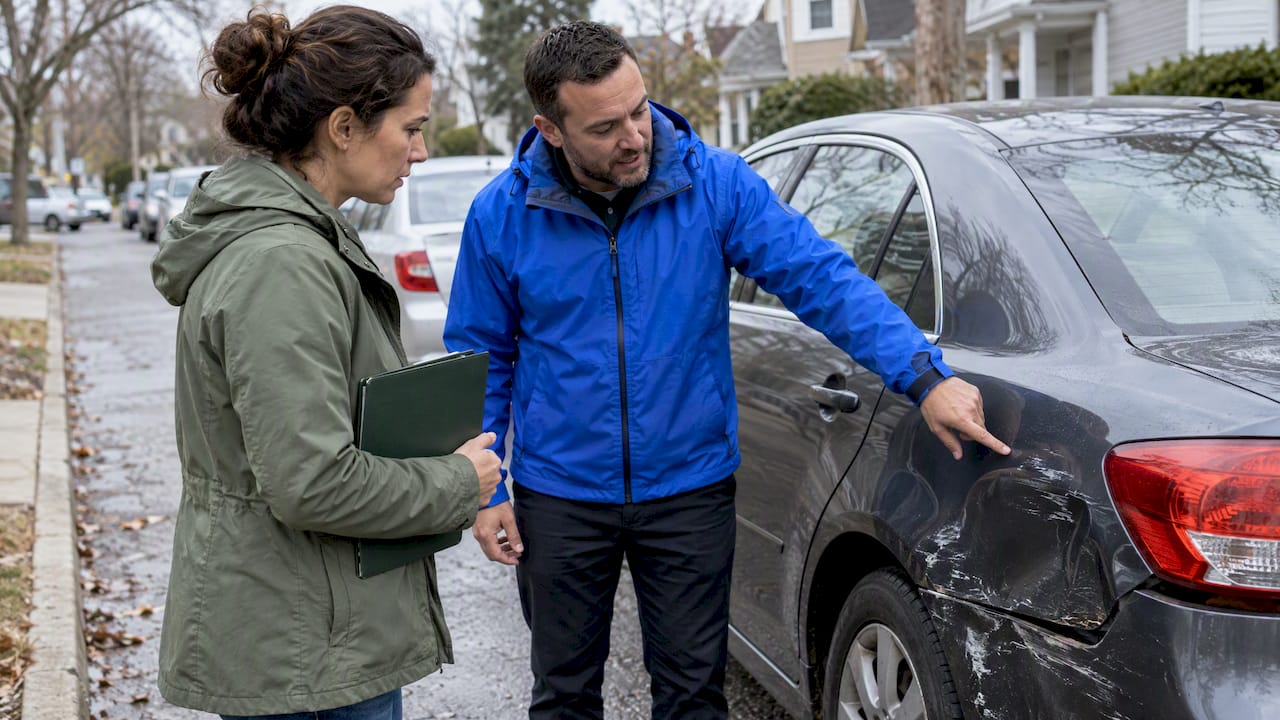
Yes, you can often get your deductible back, but only if your insurer or you recover money from the at-fault party. Reimbursement depends on fault, the success of subrogation, your state’s rules, and the exact wording in your policy. In most cases, you only see that money once the insurer has actually collected funds from the other side.
TL;DR:
- Reimbursement of your deductible depends on your insurer successfully collecting funds from the at-fault driver’s insurer, which can take multiple months depending on claim complexity.
- The recovery process often involves your insurer pursuing subrogation, with timing ranging from a few days to over 60 days or longer if disputes or litigation arise.
- Partial recoveries or shared fault can reduce your deductible refund, often proportionally, based on state laws that may follow pro-rata or made-whole doctrines.
- To improve chances of reimbursement, promptly gather and submit all accident documentation, avoid releasing your rights prematurely, and consider small claims court if recovery stalls.
- Deductible assistance programs can help cover repair costs upfront while your insurer works on recovery, especially in slow or complex subrogation cases.
Table of Contents
- How Deductible Reimbursement Actually Works: The Subrogation Pathway
- Timeline and Processing Times: What a Realistic Schedule Looks Like
- How Amounts Are Calculated: Pro-Rata Recovery, Made-Whole Doctrine, and Comparative Fault
- Practical Steps to Improve the Odds and Preserve Your Right to Reimbursement
- How Deductible Assist Works and When It Helps
- Differences Between Deductible Reimbursement and Direct Insurance Claim Deductibles
- Legal Rights and Protections of Insureds Regarding Deductible Reimbursement
- Common Disputes and How to Resolve Them
- Impact of Deductible Reimbursement on Future Insurance Premiums
- Role of Third-Party Recoveries and Involvement of Subrogation Companies
- Examples of Scenarios Where Deductible Reimbursement Applies Versus Does Not
- Author Perspective: Why Subrogation Matters but Can Be Slow
- Quick Next Steps to Get Help From Deductible Assist
- FAQ
- Sources
How Deductible Reimbursement Actually Works: The Subrogation Pathway
When you file a claim, you have two basic routes. You can file directly with the at-fault driver’s insurer, which skips your own deductible entirely but tends to move slower while liability gets sorted out. Or you file with your own insurer, pay your deductible upfront, get your car repaired faster, and let your insurer chase the other driver’s insurer for reimbursement. That second process is called subrogation: your insurer pays your claim now, then pursues the at-fault party’s insurer to recover what it spent, including your deductible.
If your insurer succeeds in collecting from the at-fault party, you are generally entitled to get your deductible back as part of that recovery. According to LegalClarity’s explainer on deductible reimbursement, reimbursement through subrogation is common when another driver caused the crash, but it is contingent on your insurer actually collecting the money, not just pursuing it.
A few things shape how this plays out:
- Your insurer typically handles the subrogation demand without extra effort from you.
- You usually get reimbursed only after funds are collected, not when the claim is filed.
- Partial recoveries can mean a partial deductible refund rather than the full amount.
Timeline and Processing Times: What a Realistic Schedule Looks Like
Reimbursement timing swings widely depending on how contested the claim is. Processing times for reimbursement vary, with the fastest administrative payments arriving in 3 to 5 business days, typical cases taking 5 to 30 business days, and complex investigations stretching 30 to 60 days or longer. That spread matters: a clean rear-end collision with a cooperative insurer resolves quickly, while a disputed-fault case can drag on for months.
Several factors push timelines in either direction:
- Clear fault with a cooperative insurer speeds things up, sometimes to the 3 to 5 day range.
- Disputed liability or conflicting accident reports slows everything down.
- An uninsured or underinsured at-fault driver often means your insurer has no one to collect from quickly, if at all.
- Litigation adds months, sometimes stretching a case toward a year before resolution.
- Insurer staffing and internal priorities affect how fast a subrogation file moves, since recovery work competes with other claims.
Some states set statutory deadlines for insurers to respond to claims or explain delays. If your insurer decides not to pursue subrogation, ask for that decision in writing. It protects your ability to pursue the deductible yourself later.
How Amounts Are Calculated: Pro-Rata Recovery, Made-Whole Doctrine, and Comparative Fault
Getting money back does not always mean getting all of it back. When an insurer recovers only part of what it paid out, many policies allocate that recovery proportionally. LegalClarity notes that insurers often divide recovered funds pro-rata, splitting the insured’s deductible against the total loss paid and applying that same ratio to whatever was actually collected. Under a pro-rata approach, you would typically see roughly 60% of your deductible back, not the full $500.

Some states apply a different rule entirely: the made-whole doctrine. Under this doctrine, courts in certain jurisdictions, including Washington in Daniels v. State Farm, have held that the insured must be fully compensated for their losses, deductible included, before the insurer keeps any of the recovered funds for itself. This protection is not universal and often hinges on specific policy language or state law, so it is worth checking where you live.
Comparative negligence adds another layer.
Pro Tip: Ask your insurer directly whether your state follows a made-whole rule or a pro-rata approach, since that single answer tells you how much of your deductible you can realistically expect back.
Practical Steps to Improve the Odds and Preserve Your Right to Reimbursement
Protecting your reimbursement starts well before any check arrives.
- Collect the police report, accident photos, repair estimates, and receipts, and submit everything to your insurer promptly.
- Avoid signing any release or accepting a quick settlement from the other driver’s insurer without confirming it does not waive your subrogation rights.
- Request written confirmation of your subrogation status, including notice if your insurer decides not to pursue recovery.
- If your insurer declines to pursue the claim or only recovers part of the funds, consider filing in small claims court yourself.
LegalClarity points out that small claims court is often a practical route for recovering a deductible when the at-fault party has identifiable assets and your documentation, especially the police report, is solid.
Pro Tip: Keep a dated folder, physical or digital, of every document tied to the claim. Insurers move faster on files that arrive complete the first time.
How Deductible Assist Works and When It Helps
While subrogation runs its course, repair bills do not wait. Our process at Deductible Assist starts with a prequalification application, followed by guidance from our team through the claims process, and ends with financial support toward your deductible for qualified applicants.
This kind of help fits best for drivers facing an immediate repair need, a subrogation case that is moving slowly, or an at-fault driver who turned out to be uninsured. Assistance here does not replace your insurance claim or your right to pursue reimbursement through subrogation or small claims court. It simply covers the gap while that process plays out, so your car gets fixed without draining your savings in the meantime.
Differences Between Deductible Reimbursement and Direct Insurance Claim Deductibles
A deductible you pay under your own policy and a deductible you get reimbursed through subrogation are not the same transaction, even though the dollar amount often matches. When you file a first-party claim, you pay your deductible as your contractual share of the repair cost, full stop, regardless of fault. That money is gone unless a second event, successful subrogation, brings it back.
Direct claims against the at-fault driver’s insurer work differently. If liability is clear and accepted quickly, you may never pay a deductible at all, since the other insurer covers the full repair cost directly. The trade-off is speed: direct claims against another insurer often take longer to get moving, because that insurer investigates fault before paying anything.
The practical distinction for you is cash flow versus certainty. Paying your own deductible gets your car into the shop fast, with reimbursement contingent on recovery later. Waiting on the at-fault insurer avoids the deductible outlay entirely, but ties your repair timeline to someone else’s investigation and willingness to accept fault.
Legal Rights and Protections of Insureds Regarding Deductible Reimbursement
Your policy is a contract, and most states require insurers to handle claims, including subrogation, in good faith. That means an insurer generally cannot simply pocket a full recovery while leaving your deductible unreimbursed without some basis in policy language or state law.
The made-whole doctrine, recognized in jurisdictions including Washington through Daniels v. State Farm, is among the clearest legal protections available to policyholders. It can require that you be compensated in full before your insurer keeps any of its own recovered funds. Where this doctrine does not apply, pro-rata allocation usually governs instead, and your reimbursement share depends on how much of the total loss was actually recovered.
You also generally have the right to ask your insurer, in writing, whether it is pursuing subrogation and why it may have declined to do so. LegalClarity’s guidance on duties after loss notes that missing filing deadlines set by your policy or state law can forfeit these rights entirely, so prompt documentation matters as much as the legal doctrine itself. If your insurer will not pursue the case and the at-fault party has identifiable assets, nothing stops you from filing in small claims court independently to recover the deductible.

Common Disputes and How to Resolve Them
Most deductible reimbursement disputes come down to one of three disagreements: who was at fault, how much was actually recovered, and whether the insurer is allocating that recovery fairly.
Fault disputes are the most common. When accident reports conflict or witnesses disagree, insurers may assign partial fault to both drivers, which immediately shrinks your recoverable deductible under comparative negligence rules. Requesting the adjuster’s written fault determination, and challenging it with additional evidence like dashcam footage or independent witness statements, is the first negotiation move.
Allocation disputes arise when an insurer recovers only part of the total loss and applies pro-rata math you were not told about in advance. Asking for a written breakdown of the recovery amount, the formula used, and your specific share is a reasonable request and often resolves the disagreement without escalation.
When direct negotiation stalls, many states offer mediation through the department of insurance, a lower-cost alternative to litigation that can resolve disputes over allocation or fault. For smaller amounts, typically the size of a standard deductible, small claims court remains a practical fallback that does not require an attorney.
Impact of Deductible Reimbursement on Future Insurance Premiums
A deductible reimbursement itself, the money you get back after successful subrogation, does not raise your premiums. What can affect your rates is the underlying accident and how fault was assigned, not the reimbursement transaction that follows.
If your insurer successfully recovers its costs from the at-fault party through subrogation, the claim is often treated differently than one where your insurer pays out and never recovers a dime. Some insurers classify fully subrogated claims as “not at fault” on your record, which can protect your premium at renewal. A claim where fault was split, or where no recovery ever happened, is more likely to factor into your rating history.
The practical takeaway is that pursuing reimbursement diligently, documenting the accident well and following up on subrogation status, serves a dual purpose. It gets your deductible back and it can help your insurer classify the claim in a way that keeps your future premiums from climbing.
Role of Third-Party Recoveries and Involvement of Subrogation Companies
Insurers do not always handle subrogation internally. Larger carriers often run dedicated subrogation units, while others contract with specialized third-party recovery firms that pursue at-fault insurers on a contingency basis, taking a percentage of whatever they recover.
Industry research from the NAIC shows subrogation and salvage recovery is a major function across the property and casualty insurance industry, with insurers collectively recovering a very large sum across auto physical damage, commercial auto liability, and personal auto liability lines, underscoring how much money moves through this system annually. That scale is why insurers invest in dedicated recovery infrastructure rather than letting claims go uncollected.
For you as the policyholder, the involvement of a third-party recovery company rarely changes your rights. You are still entitled to your share of whatever gets collected, whether your insurer’s own staff handled the recovery or an outside firm did it under contract. The same NAIC research notes that subrogation primarily benefits insurers’ loss ratios, which is a useful reminder to stay proactive: ask who is handling your file and request status updates rather than assuming the process is moving on its own.
Examples of Scenarios Where Deductible Reimbursement Applies Versus Does Not
Reimbursement applies cleanly when fault is undisputed and the at-fault driver is insured. A driver runs a red light, hits your car, their insurer accepts liability, and your insurer successfully subrogates. You get your full deductible back once the funds are collected.
Reimbursement gets partial when recovery itself is partial.
Reimbursement often stalls or fails when the at-fault driver is uninsured and has no identifiable assets. Your insurer may determine that pursuing recovery costs more than it would collect, and decline to proceed, in which case you likely keep paying your own deductible unless you pursue the matter yourself in small claims court.
Reimbursement does not apply at all in single-vehicle accidents or when you are found fully at fault. There is no at-fault third party to recover from, so the deductible you paid is simply the cost of using your own coverage.
Author Perspective: Why Subrogation Matters but Can Be Slow
Insurers pursue subrogation because it protects their own loss ratios, not out of urgency to get your money back to you. That means the burden of follow-up often falls on you: document everything, ask for status updates, and get any denial in writing. Legal protections like the made-whole doctrine vary by state, so what works for a friend elsewhere may not apply to your policy. When waiting is not realistic, a deductible-assistance option can bridge the gap while subrogation plays out.
— Mikayel
Quick Next Steps to Get Help From Deductible Assist
If a slow subrogation timeline is leaving you stuck covering repair costs out of pocket, we built our process to move faster than that wait. Starting a no-obligation eligibility check through our deductible assistance page takes a few minutes, and qualifying applicants get connected with a case handler who walks through next steps.

Before you start, have these on hand:
- Your claim number and insurer contact information.
- A copy of the police report, if one was filed.
- A repair estimate or invoice from your shop.
- Photos of the vehicle damage.
This kind of support covers upfront deductible costs while your insurer continues handling subrogation in the background, so repairs do not have to wait on someone else’s recovery timeline.
FAQ
What is an insurance deductible?
A deductible is the amount you pay out of pocket on a claim before your insurance coverage pays the rest. It applies regardless of fault unless you later recover that amount through subrogation or a direct claim against the at-fault party.
Do I get my deductible back if the other driver was at fault?
Often yes, through your insurer’s subrogation process, but only once your insurer actually collects money from the at-fault party’s insurer. If the recovery is partial, your deductible refund may be partial too under a pro-rata allocation.
What is coinsurance?
Coinsurance is the percentage of a covered cost you pay after meeting your deductible, with your insurer covering the remaining share. It is more common in health insurance than in standard auto physical damage coverage.
What is considered a good comprehensive deductible for car insurance?
There is no single figure that fits every driver, since the right deductible depends on your budget for an unexpected repair and how much you want to save on premiums. A lower deductible means higher premiums, while a higher deductible lowers your premium but increases what you pay if you file a claim.
How long does deductible reimbursement typically take?
Timing varies widely: simple administrative reimbursements can arrive in 3 to 5 business days, typical cases take 5 to 30 business days, and complex or disputed cases can stretch past 60 days. Disputed fault, an uninsured at-fault driver, or litigation all extend that timeline further.
Sources
- Car Insurance Deductible Reimbursement: How It Works — LegalClarity
- Daniels v. State Farm Mut. Auto. Ins. Co. — Washington Supreme Court decision
- NAIC guidance (processing time ranges)
Leave a Reply