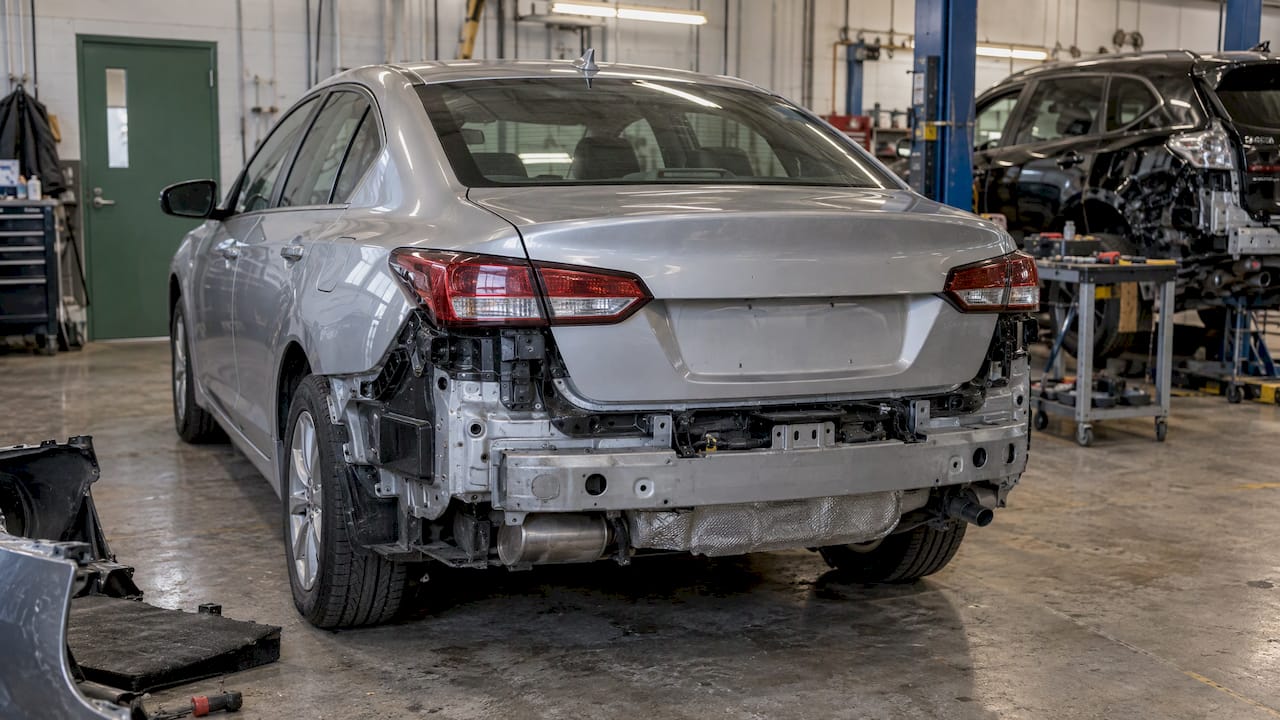
If your leased car is damaged, you pay the deductible, not the leasing company. The lessor owns the car, but you are the insured driver on the policy, so the deductible lands on you. The good news: a leased car does not shut you out of deductible help. It just adds a few steps, because the lessor has a say in how the car gets repaired. This guide explains who owes what, what your lease probably requires, and how to cover the deductible without borrowing at a bad rate.
TL;DR
- The lessee pays the deductible on a leased car, because the lessee is the named insured, even though the leasing company holds the title (MoneyGeek).
- Your lease may cap your deductible, and some lessors set that cap at $1,000 (Toyota Financial Services). Check your own contract before you choose or change a deductible.
- Report the accident quickly, and ask the lessor whether repairs must go through an authorized dealer.
- If you cannot cover the deductible, start with a free prequalification check and look at disaster aid if the damage came from a declared disaster.
- If the car is totaled, gap coverage decides whether you owe money beyond the insurance payout.
Table of Contents
- Who pays the deductible on a leased car
- What your lease can require about insurance
- What to do right after your leased car is damaged
- If the repair costs less than your deductible
- If the leased car is totaled
- Ways to cover the deductible when you cannot afford it
- What to ask before you accept deductible help on a leased car
- Perspective
- Get a free eligibility check
- FAQ
- Sources
Who pays the deductible on a leased car
You do. A lease gives you the right to drive the car, but the policy names you as the primary insured. When a claim is paid, the insurer subtracts the deductible from the payout, and that amount is yours to cover. The lessor is not responsible for repairs to damage that happens while you have the car (MoneyGeek).
That surprises many drivers. They assume “the leasing company owns it, so they handle it.” In practice the lessor sits in the background. It is listed on the policy, it receives the money if the car is totaled, and it can set conditions on repairs. It does not write the check for your deductible.

The type of damage does not change who pays, but it can change how much. Collision and comprehensive deductibles are set separately on a policy, and many drivers choose a lower amount for comprehensive events and a higher one for collision (MoneyGeek). So the bill after a crash can differ from the bill after vandalism, hail or a tree falling on the car. Open your declarations page and read both numbers before you call the shop.
Which deductible applies to your situation
| What happened | Coverage that usually responds | Deductible you check |
|---|---|---|
| You hit another car or an object | Collision | Collision deductible |
| Someone keyed, broke into or vandalized the car | Comprehensive | Comprehensive deductible |
| Storm, flood, fire or falling debris | Comprehensive | Comprehensive deductible |
| You hit an animal | Usually comprehensive, but confirm with your insurer | Check your policy wording |
| Another driver caused the crash | Their liability coverage, or your collision coverage if you claim on your own policy | Depends on which route you take |
If the other driver was at fault, you may still be asked to pay a deductible up front. Our guide on no-fault versus at-fault deductibles walks through when that happens.
What your lease can require about insurance
Lessors protect an asset they own, so they write insurance rules into the contract. You should read three things in yours.
Required coverage. Collision and comprehensive are not required by state law, but lenders and lessors can require them on financed or leased vehicles (NAIC). If you lease, assume you must carry both.
A deductible cap. One lessor, for example, requires physical damage insurance for the full value of the vehicle with a maximum deductible of $1,000, plus liability coverage at your state’s minimum limits or higher (Toyota Financial Services). Your lessor’s number may differ. The practical point: you cannot raise your deductible to $2,500 to save on premiums if the lease says $1,000 is the ceiling. Raising a deductible does lower premiums, but you must be ready to pay that amount out of pocket when a loss happens (NAIC). On a lease, the cap keeps your worst-case bill predictable.
Gap protection. Many lease agreements include gap coverage, sometimes called a waiver of responsibility in case of loss. If yours does not, similar coverage may be available through your auto policy (Progressive). We come back to this below, because it matters most when the car is totaled.
What to do right after your leased car is damaged
The order matters more on a lease than on a car you own. Follow these steps.
- Make sure everyone is safe and document the damage. Photos of the damage, the scene and any other vehicles help your claim.
- Read the reporting clause in your lease. Check that you report the accident in time, since lessors can set their own deadlines (Progressive).
- Confirm the policy details. The vehicle identification number (VIN) on your policy should be accurate, and the lessor should be listed as the lienholder (NAIC). A mismatch can slow a claim.
- File the claim and cooperate with the investigation. An insurer may deny a claim if you do not cooperate, and it may deduct for old unrepaired damage, wear and tear, missing parts and rust (Illinois Department of Insurance). Our piece on talking to an insurance adjuster covers what to say and what to keep in writing.
- Ask the lessor about repair rules. Leasing companies may require repairs at an authorized dealer or with original manufacturer parts, and ignoring those rules can lead to financial penalties (Nolo). Get the requirement in writing before you authorize work.
- Plan the deductible before the repair is finished. Most shops want payment when you pick up the car. Line up the money, or the assistance, ahead of that day. The six auto claim steps we published show how to keep repairs moving without taking on bad debt.
One warning for drivers in Illinois: it is insurance fraud there for a repair shop to offer to pad a repair estimate to help you recover your deductible (Illinois Department of Insurance). Even where the rule differs, a shop that offers to “absorb” your deductible by inflating the estimate is putting your claim and your lease at risk. Say no.
If the other driver had no insurance, the rules for your own uninsured motorist coverage and its time limits matter. A Utah-based firm explains uninsured motorist claim deadlines for that state, and it is worth reading if that is your situation, though time limits differ by state.
If the repair costs less than your deductible
Sometimes the estimate comes in under the deductible, and filing a claim pays you nothing. On a leased car this still deserves a careful look, because the lessor may expect damage to be repaired properly and may charge for it at lease end if it is not. We explain the options in what to do when the repair cost is below your deductible. Keep the estimate, the photos and any receipts.
If the leased car is totaled
A total loss is where a lease differs most from ownership.
- The insurer pays the car’s actual cash value, minus your deductible, directly to the leasing company (Progressive).
- The lease ends. But you stay responsible for any gap between that payout and what you still owe on the lease, unless you have gap coverage (Nolo).
A simple example with round numbers, not a real quote: say the car is worth $20,000 at the time of loss, your deductible is $1,000, and you still owe $23,000 on the lease. The insurer pays $19,000 to the lessor. Without gap coverage, you could owe the remaining $4,000, which includes your deductible. With gap coverage, the gap portion is typically handled, though you should read your waiver for what it excludes, and the deductible may or may not be included. Ask before you assume.
That is why checking for gap protection is not a side detail. It can be the difference between a manageable deductible and a four-figure surprise.
Ways to cover the deductible when you cannot afford it
You have more routes than most drivers expect. Work through them in order.
1. Deductible assistance. This is what we do. A prequalification application, guidance from a case handler and, for applicants who qualify, financial support toward the deductible. Details in the promo section below.
2. Disaster aid. If a natural disaster damaged the car and it affects your ability to make payments, contact your lender or lessor (USAGov). In presidentially declared disasters, individual households may qualify for Small Business Administration disaster loans that help with repair or replacement costs for cars insurance does not cover (USAGov). Those are loans, so weigh the repayment terms. For California drivers dealing with fire, see our wildfire car deductible help page.
3. A payment plan with the shop. Some repair shops split the deductible over a few payments. Ask early and get the terms in writing. Our overview of deductible payment plan options shows how to compare them without adding debt.
4. Financing. If you borrow, compare the true cost, not the monthly payment. We broke that down in deductible financing options.
5. Talk to your lessor. If the lease payment itself is at risk because of the accident, call the lessor before you miss a payment. Explain what happened and ask what they can do.
A broader list of ways to cover the cost is in five ways drivers can cover a car deductible.

What to ask before you accept deductible help on a leased car
Assistance programs have terms, and a lease adds a layer. Before you apply anywhere, ask these questions.
- Does the program cover damage to a leased vehicle, or only cars you own? Do not assume either way.
- Does the cause of damage (collision, vandalism, natural disaster, animal) matter for eligibility?
- Is there a cost to check eligibility, and is it free of obligation?
- Who gets paid, and when: you, the shop or the insurer?
- Does the help depend on the repair being done at a particular shop, and does that shop meet your lessor’s authorized-repair rules?
- What documents will you need: the claim number, the estimate, the declarations page, the lease?
Our guide on questions to ask to cover a car deductible goes deeper on each one. If your claim is denied, the picture changes, and what to do after a denied claim explains how the deductible fits in.
Perspective
We hear the same worry from lease drivers: “It isn’t even my car, so why am I the one stuck with the bill?” The answer is that you hold the policy, and the deductible follows the policy. What drivers rarely hear is that the lease does not make the problem harder to solve. It makes the timing more important.
Our view is that a deductible should never be the reason a repair gets delayed, patched cheaply or put on a high-interest card. On a lease, a delayed or poorly done repair can come back as a charge at turn-in. That is why we built the process around a simple order: check eligibility first, with no obligation, then work with a dedicated case handler while the claim is moving, and only then arrange deductible support for those who qualify.
If you lease, bring your lease terms to the first conversation. The deductible cap, the repair rules and any gap coverage all shape the plan, and we would rather sort them out at the start than after the shop has the keys.
Mikayel
Get a free eligibility check
Deductible Assist helps drivers who cannot cover a deductible after a collision, vandalism, a natural disaster or animal damage. The process has three steps: complete a prequalification application, get expert guidance on the claim, and secure deductible support if you qualify. Each applicant works with a dedicated case handler, and the eligibility check is free and carries no obligation. We do not publish a price for the service.

If you lease, mention it in your application so your case handler can plan around your lessor’s rules. Start at Deductible Assist, or read how our three-step assistance process works first.
FAQ
Does the leasing company pay my deductible if the car is damaged?
No. The lessee is responsible for the deductible, because the lessee is the named insured on the policy. The leasing company owns the car but is not responsible for repairs to damage that happens while you are driving it (MoneyGeek).
Can I raise my deductible on a leased car to lower my premium?
Only within what your lease allows. Some lessors cap the deductible, for example at $1,000 (Toyota Financial Services). A higher deductible lowers premiums but means a larger out-of-pocket bill after a loss, so only choose an amount you could actually pay.
What happens if my leased car is totaled and I owe more than it is worth?
The insurer pays the actual cash value, minus the deductible, to the leasing company, and the lease ends. You remain responsible for any remaining gap unless you have gap coverage (Nolo). Check your lease for a gap waiver or ask your insurer about gap coverage.
Do I have to use the dealer for repairs on a leased car?
Possibly. Leasing companies may require an authorized dealer or original manufacturer parts, and breaking those rules can bring financial penalties (Nolo). Ask your lessor for the requirement in writing before you approve a repair.
Can I get help paying the deductible on a leased car?
Often there are options, but terms vary by program, so ask whether leased vehicles qualify. You can start with a free, no-obligation eligibility check at Deductible Assist and tell us the car is leased.
Sources
- Insuring a Leased Vehicle, MoneyGeek
- Does Car Insurance Cover Damage to My Own Vehicle?, MoneyGeek
- Insurance requirements for a financed or leased vehicle, Toyota Financial Services
- Leased Car Accidents, Progressive
- Leased Car Accident: Who Pays for Damage?, Nolo
- Auto insurance, NAIC
- Does Your Vehicle Have the Right Protection?, NAIC
- Filing a Claim with Your Own Insurance Company, Illinois Department of Insurance
- Get help with bills after a disaster, USAGov
- How to apply for an SBA disaster loan, USAGov
Leave a Reply