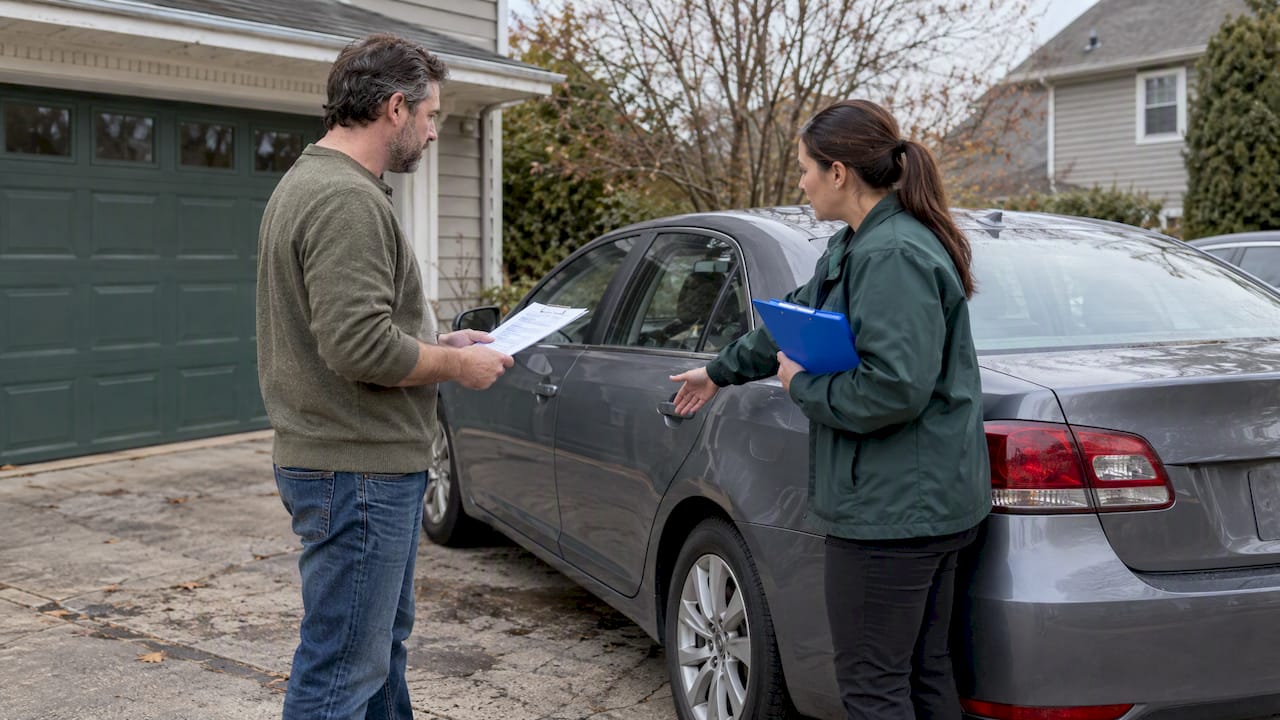
Uninsured motorist bodily injury coverage usually comes with no deductible, but uninsured motorist property damage often does, typically a fixed dollar amount set by your insurer or your state. Whether a deductible applies to your claim depends on your policy’s declarations page, the specific endorsement you carry, and the rules in your state. Always check your paperwork before assuming either way.
TL;DR:
- Uninsured motorist property damage often has a deductible set by your insurer or state, usually around 250 dollars, unlike bodily injury coverage which typically has none.
- Deductibles for property damage are usually outlined on your declarations page and may be waived if your insurer offers a collision deductible waiver for at-fault uninsured drivers.
- State laws and regulations, such as in Maryland and Ohio, can set specific dollar amounts or caps on uninsured motorist property damage deductibles.
- Filing a claim under UMPD versus collision coverage depends on your policy terms, with some insurers reimbursing deductibles if they recover funds through subrogation.
- Always confirm your deductible details with your insurer, ask if deductible reimbursement is possible, and promptly collect evidence after an incident to support your claim.
Table of Contents
- How uninsured motorist deductibles actually work
- State rules that change whether a deductible applies
- How UM deductibles interact with other coverages
- Finding your deductible and what to do after a crash
- Deductible Assist: how the service works and when it helps
- What claimants get wrong about UM deductibles
- Getting started with deductible help
- FAQ
- Sources
How uninsured motorist deductibles actually work
Uninsured motorist coverage splits into two distinct pieces, and mixing them up is the most common reason drivers get confused about deductibles. Uninsured motorist bodily injury (UMBI) pays for medical costs, lost wages, and pain and suffering when an uninsured driver injures you. Uninsured motorist property damage (UMPD) pays to repair or replace your vehicle when an uninsured driver hits it. UMBI rarely carries a deductible. UMPD frequently does, because it functions more like first-party physical damage coverage than like traditional liability coverage.
That distinction matters for how claims get handled, too. A UMBI claim is processed more like a liability claim against your own insurer standing in for the uninsured driver. A UMPD claim often gets treated similarly to a collision claim, which is why insurers sometimes apply a deductible to it.
Your declarations page and the endorsements attached to your policy are where this gets spelled out in writing:
- The declarations page lists your coverage limits and any deductible amount tied to UMPD.
- Endorsements (separate forms attached to your policy) may define a deductible specific to that coverage.
- Some insurers offer a collision deductible waiver when an uninsured driver is clearly at fault, which can eliminate your out-of-pocket cost entirely.
State rules that change whether a deductible applies
State insurance departments and statutes sometimes dictate UM deductible terms directly, which means two drivers in different states with similar policies can face very different out-of-pocket costs. Insurers design their forms around what each state allows, so the same coverage name can work differently depending on where you live.
Maryland’s insurance regulator explains that Maryland policies typically list both UMPD and UMBI, and state guidance points to a $250 UMPD deductible as a standard example in Maryland. Ohio law similarly caps certain uninsured motorist property-damage deductibles at $250 in specified statutory coverage situations. Neither example is a nationwide rule, but both show how state law can set a specific number rather than leaving it entirely to the insurer.
Uninsured driving is common enough that this isn’t a rare edge case. [Triple-I reports that 15.4% of U.S. motorists were uninsured in 2023](https://www.iii.org/fact-statistic/facts-statistics-uninsured-motorists), with California at 20.4% in the same measure, so UM deductible questions affect a meaningful share of drivers nationwide.
- Check your state insurance department’s consumer pages for UM/UIM guidance specific to your state.
- Compare that guidance against your own declarations page, since your actual policy controls your claim.
How UM deductibles interact with other coverages
Deciding whether to file under UMPD or collision coverage after a crash with an uninsured driver changes your math. If you have collision coverage, you can often choose it instead of UMPD, especially if your collision deductible is lower or your insurer offers a waiver when the other driver is uninsured and at fault. Some insurers will waive the collision deductible entirely in that scenario, while others won’t.
Whether you get your deductible back later depends on your policy language and your state. If your insurer later recovers money from the at-fault uninsured driver through subrogation, some policies reimburse part or all of your deductible. This isn’t automatic everywhere, so ask directly rather than assuming.
Diminished value, the drop in your car’s resale value even after a quality repair, is a separate and often overlooked issue. NAIC research on diminished-value claims notes that recovering diminished value under UMPD varies by state and insurer and usually requires a professional appraisal or market evidence, not just a repair estimate.
Pro Tip: Ask your insurer in writing whether your UMPD deductible is refundable through subrogation before you agree to a settlement.

Finding your deductible and what to do after a crash
Your UMPD deductible, if one applies, will be listed on your declarations page near your property damage or UM/UIM section, sometimes cross-referenced to a separate endorsement titled “Uninsured Motorist Property Damage” or similar. NAIC’s auto coverage matrix confirms that insurers report UM/UIM deductible terms separately from bodily injury limits, which is why the two numbers rarely appear on the same line.
After a crash involving an uninsured or unidentified driver, move quickly:
- Call the police and get a report, especially for hit-and-run incidents.
- Photograph the damage, the scene, and any visible plates or vehicle details.
- Collect witness names and contact information on the spot.
- Get a written repair estimate before authorizing work.
- Save towing and rental receipts for possible reimbursement.
Stick to facts when you talk to your insurer early on. Don’t guess at fault, speculate about injuries, or agree to a settlement figure before you understand your deductible and reimbursement options.
Pro Tip: Ask your claims adjuster directly: “Does my UMPD deductible get waived or reimbursed if you recover money from the at-fault driver?”
Deductible Assist: how the service works and when it helps
When a deductible still leaves you short on repair funds, Deductible Assist’s prequalification process offers a straightforward path forward. We start with a short prequalification application, follow with expert guidance from a dedicated case handler who walks you through documentation, and finish by connecting qualified applicants with deductible support. We help drivers facing a deductible from a collision, vandalism, or weather damage who need assistance bridging the gap before repairs can begin. Confirm your insurer’s claim steps and file any required notices first, since that documentation is typically part of what we ask for during review.
What claimants get wrong about UM deductibles
The biggest mistake is treating UMBI and UMPD as one coverage with one deductible rule, when they’re governed by separate terms. Skipping the endorsement language and delaying a police report are close behind, since both can complicate a claim later. Keep a digital copy of your declarations page, ask your insurer clarifying questions before authorizing repairs, and hold onto every receipt. If your insurer stonewalls a reasonable question, your state insurance department, an attorney, or a deductible assistance service are reasonable next steps.
— Mikayel
Getting started with deductible help
If a UMPD or collision deductible is standing between you and a repair shop, our prequalification application takes a few minutes to complete and starts the review process.

We typically ask for your claim number, repair estimate, and declarations page, and most applicants hear back with a decision timeline shortly after submitting. Once you’re prequalified, our confirmation page walks you through what happens next. Confirm your insurer’s claim steps and required notices first, then start your application when you’re ready.
This article is general information, not a substitute for advice from a qualified financial advisor. Consult a qualified financial professional about your own circumstances before acting on anything here.
FAQ
Is there a deductible on an uninsured motorist claim?
It depends on which coverage applies: uninsured motorist bodily injury (UMBI) typically has no deductible, while uninsured motorist property damage (UMPD) often does. Your declarations page and state rules, like the $250 example in Maryland, determine the exact amount.
Is $2,000 a high deductible for car insurance?
A higher deductible lowers your premium in exchange for more out-of-pocket risk. Whether a deductible is considered high depends on your ability to cover that amount quickly if a claim arises.
What should I avoid telling my insurance company?
Avoid guessing at fault, estimating injuries before a medical evaluation, or agreeing to a settlement number before you understand your deductible and reimbursement options. Stick to verified facts: what happened, when, and who was involved.
How do I get out of paying my deductible?
Some insurers waive a collision deductible when an uninsured driver is clearly at fault, and some UMPD deductibles are reimbursed later through subrogation if your insurer recovers funds from that driver. Ask your insurer directly about waiver and reimbursement options, or look into deductible assistance if you need help covering the cost now.
What’s the difference between UMBI and UMPD?
UMBI covers medical bills, lost wages, and pain and suffering from injuries caused by an uninsured driver, usually without a deductible. UMPD covers vehicle repair costs and often carries a deductible similar to collision coverage.
Sources
- Ohio Revised Code §3937.181
- Maryland Insurance Administration — Uninsured motorist
- Insurance Information Institute — Uninsured motorists facts & statistics
- NAIC — Automobile diminished value claims (CIPR/JIR 2023)
Leave a Reply