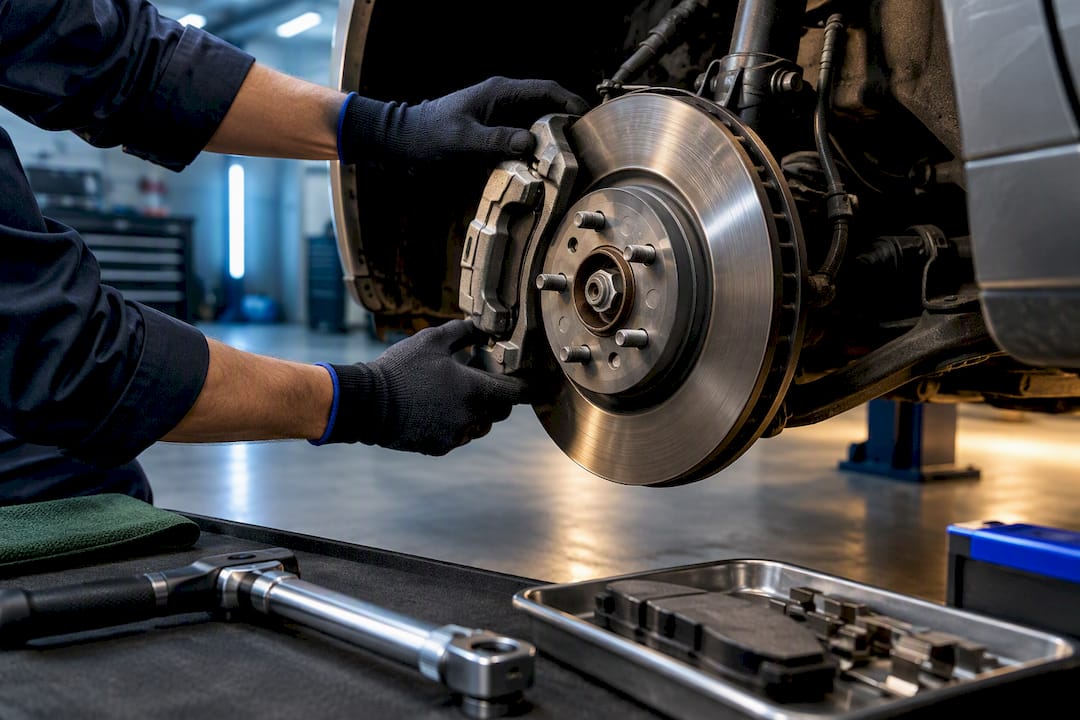
Vehicle repair covers everything from routine maintenance to major mechanical fixes and manufacturer recall remedies. Before you authorize any work, check your owner’s manual, look up open recalls using your VIN, and get a written estimate. If the problem turns out to be a safety recall or warranty item, pursue the manufacturer or dealership first since that repair should cost you nothing.
TL;DR:
- Most costly repairs, such as transmission or engine replacements, often cost thousands of dollars, with labor and parts being the main factors.
- Finding a trustworthy repair shop involves checking certifications, getting written estimates, and comparing prices through multiple shops beforehand.
- Keeping detailed records of all maintenance and repair receipts supports warranty claims and reimburses for recalled repairs.
- For safety and legal protection, document all estimates and invoices, verify recalls using your VIN, and consider deductible assistance programs if your out-of-pocket costs are high.
Table of Contents
- Routine Vehicle Maintenance: What to Schedule and Why It Matters
- What Are the Most Common and Costly Car Repairs?
- How Do I Find and Choose a Repair Shop?
- DIY Basics: What You Can Safely Fix Yourself
- Recalls and Warranties: What Every Car Owner Should Know
- What Are My Rights if a Repair Goes Wrong?
- How to Prepare Before and During a Repair
- How Deductible Assistance Fits Into Repair Planning
- How Long Does a Typical Vehicle Repair Take?
- What’s the Real Total Cost of a Vehicle Repair?
- What Actually Matters When Your Car Needs Fixing Now
- A Straightforward Way to Cover Your Repair Deductible
- Sources
- FAQ
Routine Vehicle Maintenance: What to Schedule and Why It Matters
Most expensive repairs start as a maintenance item nobody got around to. Oil changes, brake inspections, tire rotations, battery checks, fluid top-offs, and air-filter swaps are the backbone of any car maintenance plan, and skipping them quietly shortens the life of far more expensive parts.
Your owner’s manual sets the actual schedule, not a shop’s sticker on your windshield. Manufacturers build these intervals around how their specific engine, transmission, and drivetrain wear, so a generic “every 3,000 miles” rule doesn’t fit every vehicle anymore. Put off a coolant flush long enough and you’re not looking at a $60 fix, you’re looking at a $4,000 head gasket job.
Typical items on a routine vehicle inspection include:
- Engine oil and filter
- Brake pads, rotors, and fluid
- Tire pressure, tread, and rotation
- Battery terminals and charge level
- Coolant, transmission, and power steering fluid
- Air and cabin filters
Keep every receipt, and note the mileage on each one. A dated service log does two things: it shows a future buyer the car was cared for, and it’s often the first document a warranty claim or a recall reimbursement request asks for.
Pro Tip: Take a photo of your odometer every time you get service done. It’s a free, timestamped backup if a paper receipt ever gets lost.
What Are the Most Common and Costly Car Repairs?
Some repairs are predictable enough that you can budget for them. Brake pads and rotors, starters, alternators, air conditioning compressors, suspension components, and transmission work make up the bulk of non-routine repair bills, and the cost gap between them is wide. Brake pads might run a few hundred dollars; a transmission rebuild can climb into four figures fast.
What actually drives the final number is rarely just the part. Diagnostic and tear-down charges get billed before a mechanic even confirms what’s wrong, labor rates swing significantly by region and by shop type (a dealership typically charges more per hour than an independent garage), and the choice between OEM and aftermarket parts can shift a bill by hundreds of dollars either way.
Catching problems early keeps them cheap. Watch for:
- Grinding, squealing, or clunking noises
- Burning smells or fluid odors inside the cabin
- Dashboard warning lights that weren’t there yesterday
- Pulling, vibration, or sluggish handling
AAA’s guidance on car maintenance is blunt about this: your senses (sound, smell, and feel) are diagnostic tools. Ignoring a grinding brake noise for a few more weeks routinely turns a pad replacement into a rotor and caliper replacement, too.
How Do I Find and Choose a Repair Shop?
A good mechanic near me search starts before you ever need one. Ask friends and family for recommendations, check your state’s automotive repair registry, and look for AAA Approved Auto Repair shops if one operates near you. Certifications matter here: a technician holding an ASE (National Institute for Automotive Service Excellence) credential has passed standardized competency tests, and a shop’s state license confirms it’s operating legally.
Before any work begins, do this:
- Get a written estimate that itemizes parts and labor separately.
- Ask about the shop’s parts policy: new, refurbished, or aftermarket, and who decides.
- Confirm the labor warranty length and what it covers if the same problem returns.
- Set an approval threshold in writing so the shop can’t add work without calling you first.
- Request an itemized invoice at pickup, not just a total.
The FTC’s auto repair guidance puts it simply: being prepared, knowing basics, asking for estimates, comparing shops, and keeping records is the single best defense against getting overcharged.
Red flags are usually easy to spot once you know to look. A shop that won’t put an estimate in writing, pressures you to approve extra work on the spot, or refuses to show you the parts they pulled out of your car is one to walk away from. Trust signals run the opposite direction: visible certifications, a written guarantee, and a willingness to explain the diagnosis in plain terms.
Pro Tip: Call two shops for the same estimate before major work. A wide gap in price usually means one of them is guessing.
DIY Basics: What You Can Safely Fix Yourself
Plenty of car maintenance doesn’t require a mechanic. Swapping a battery, replacing air or wiper filters, topping off fluids, changing a headlight bulb, and checking tire pressure are all low-risk jobs most drivers can handle with basic tools and twenty minutes.
Some systems are not worth the risk. Airbag components, steering and suspension teardowns, transmission internals, and anything tied to electronic safety systems (stability control, anti-lock brakes) can injure you or leave the vehicle unsafe if reassembled wrong, and mistakes here can also void a warranty.
If you’re going to tackle something yourself:
- Use a trusted, model-specific guide like iFixit’s car and truck repair section rather than a random video.
- Stop the moment a job requires removing safety equipment or working near the fuel system.
- When a warning light won’t clear or a noise doesn’t match anything in your guide, that’s your signal to get a professional diagnosis instead of guessing further.
Recalls and Warranties: What Every Car Owner Should Know
A safety recall means the manufacturer must fix the defect for free. Check your VIN at NHTSA’s recall lookup tool, and know that once a recall is issued, manufacturers are required to notify owners within 60 days and provide a remedy through repair, replacement, or refund at no charge.
Warranty coverage and extended service contracts are not the same thing, and that distinction costs consumers money every year. A factory warranty comes from the manufacturer as part of your purchase; a service contract is a separate product you can buy, often from a third party, and it works more like optional insurance. Federal rules require that warranty terms be available to read before you buy, and manufacturers generally cannot force you to use dealer-only parts or service to keep coverage valid unless those parts are provided free, according to FTC warranty guidance.
Watch for scams here specifically. The FTC has flagged unsolicited calls and mailers claiming your warranty is “about to expire” as a common pressure tactic used to sell overpriced or worthless contracts.
If you already paid for a repair that later turns out to be covered by a recall, you may qualify for reimbursement. NHTSA guidance lays out eligible time windows and the documentation required, so keep:
- The original repair invoice showing parts and labor
- Proof of payment
- Any correspondence with the dealer or manufacturer about the issue
What Are My Rights if a Repair Goes Wrong?
Save everything before a dispute even starts. Estimates, written authorizations, final invoices, and, where possible, the actual parts that were replaced, all become evidence if a shop’s work fails or the bill doesn’t match what you approved.
If something goes wrong, escalate in order:
- Talk to the shop manager directly and ask for a specific correction, not just an apology.
- If it’s a warranty item, contact the manufacturer or dealership rather than paying out of pocket again.
- File a complaint with your state Attorney General’s office or state consumer protection agency if the shop won’t resolve it.
- Report the issue to the FTC if you suspect deceptive practices, especially with a chain or franchise.
- Consider small claims court for disputes involving a few thousand dollars or less. It’s designed to be used without a lawyer.
Get a second opinion before agreeing to any repair over a few hundred dollars, particularly if a shop is pushing hard for an immediate decision. A second mechanic’s assessment is often the fastest way to confirm whether you’re being told the truth.
How to Prepare Before and During a Repair
A few minutes of preparation prevents most surprise charges. Ask for a written, itemized estimate before any work starts, and set a dollar limit the shop cannot exceed without calling you first.
Beyond the estimate, ask directly:
- What type of parts will be used: new, remanufactured, or aftermarket?
- What’s the labor warranty period, and does it cover a repeat failure?
- What’s the realistic turnaround time?
- Will the shop return your old, replaced parts?
Keep a copy of every document you sign or receive. Before you drop the car off, photograph any existing damage and note the odometer reading. It’s a small habit that removes any argument later about what condition the car was in when it arrived.
How Deductible Assistance Fits Into Repair Planning
When a collision, vandalism, or natural disaster hits, your insurance deductible can be the thing standing between you and a needed repair. Deductible assistance is a service that helps qualified drivers cover that out-of-pocket cost. Deductible assistance programs generally follow a process that includes prequalification, expert guidance through the claim, and support securing the deductible payment. It’s worth considering alongside payment plans and a direct conversation with your insurer, especially when the alternative is delaying a safety-critical repair.
How Long Does a Typical Vehicle Repair Take?
Timeframes vary enormously depending on what’s actually broken and whether the shop has the part in stock. An oil change or brake pad swap usually takes under an hour. A brake rotor and pad job together typically runs two to three hours.
More involved work stretches out fast. A starter or alternator replacement often takes half a day once the shop gets to it. Air conditioning repairs depend heavily on whether the problem is a simple recharge or a compressor replacement, ranging from an hour to most of a day. Transmission repairs are the outlier: a rebuild can take several days to a week or more, partly because of labor hours and partly because transmissions are frequently rebuilt off-site or ordered as a unit.
Parts availability is often the real bottleneck, not labor. A common part sitting on a shelf gets installed the same day. A part that has to be special-ordered, especially for an older or less common model, can add days or weeks to the timeline regardless of how skilled the shop is.
If your car isn’t safe to drive, ask upfront how long the shop expects the vehicle to be out of service, and ask about loaner or rental options. Shops dealing with insurance claims after a collision often have a rough estimate ready within a day or two of the initial inspection, even if the full repair takes longer.

What’s the Real Total Cost of a Vehicle Repair?
The number on the initial estimate is rarely the number on the final bill, and the gap usually comes from fees nobody mentions upfront. Diagnostic fees, sometimes waived if you proceed with the repair and sometimes not, can add $50 to $150 before a wrench even touches the car.
Shop supply fees, environmental disposal charges for old fluids and batteries, and sales tax on both parts and labor (which varies by state) all stack onto the base repair price. A brake job quoted at $300 for parts and labor can land closer to $360 to $380 once fees and tax are added.

Ask for a breakdown that separates every line item: parts, labor, diagnostic fee, shop supplies, and tax. That itemized invoice is also your best protection if a dispute comes up later, since a vague lump-sum total gives a shop room to explain away charges you never agreed to. If a shop resists giving you that breakdown before work starts, treat it as a warning sign, not a formality.
For specialized repairs like windshield damage, costs and processes work a little differently than mechanical repairs. This guide to auto glass replacement breaks down what US drivers should expect on pricing and insurance coverage for that specific job.
What Actually Matters When Your Car Needs Fixing Now
Safety comes first, every time. Check for open recalls before you spend a dollar on a repair that might be free. Document every estimate, authorization, and invoice, because that paper trail is what protects your reimbursement rights and your legal options if something goes wrong. And if the deductible itself is what’s keeping a necessary repair from happening, that’s a cost problem worth solving directly rather than a reason to delay.
— Mikayel
A Straightforward Way to Cover Your Repair Deductible
Some deductible assistance services exist for one specific problem: your insurance approved the repair, but the deductible is more cash than you have on hand right now. Instead of delaying a safety-critical fix or putting it on a high-interest card, such services may offer a path to deductible support built around steps like prequalification applications, expert guidance through the process, and help securing funds once you qualify.

This matters most after a collision, vandalism, or storm damage, when the repair shop is waiting on your go-ahead and every day of delay is a day you’re driving (or not driving) a damaged vehicle. There’s no obligation tied to checking your eligibility. If a deductible is the only thing standing between you and a repair your insurance already approved, start the prequalification application for deductible assistance and find out where you stand.
Sources
Before paying for any repair, confirm the basics with sources that carry legal weight. NHTSA’s recall database lets you check your VIN directly. The FTC’s warranty guidance explains your rights on coverage terms. State bureaus, like California’s Bureau of Automotive Repair, maintain licensed-shop registries and handle consumer complaints.
This article is general information, not a substitute for advice from a qualified lawyer. Consult a qualified legal professional about your own circumstances before acting on anything here.
- Auto Repair Basics | Consumer Advice, FTC
- Recalls | NHTSA
- The what, when, and why of car maintenance | AAA Exchange
FAQ
What Is the $3,000 Rule for Car Repairs?
There’s no single federal “$3,000 rule.” It’s a rule of thumb some drivers and insurers use: if a repair estimate approaches or exceeds a vehicle’s actual cash value (often cited loosely around the $3,000 mark for older cars), it may make more financial sense to consider replacing the car instead of repairing it. Get an independent valuation before deciding either way.
Is $100 an Hour Fair for Mechanic Labor?
Labor rates vary widely by region and shop type, and dealerships typically charge more per hour than independent garages. The only way to know if a rate is fair locally is to compare a written estimate from at least one other shop before agreeing to the work.
Which Part of a Car Is Most Expensive to Fix?
Transmission and engine replacements are consistently among the costliest vehicle repairs, often running into the thousands of dollars once parts and labor are combined. Suspension and air conditioning compressor failures can also get expensive depending on the vehicle and whether OEM parts are required.
How Do I Find a Trustworthy Mechanic Near Me?
Start with your state’s auto repair registry, ask for personal recommendations, and look for ASE certification and a written estimate policy. The FTC recommends comparing at least two shops and insisting on an itemized invoice before you pick one.
What If I Can’t Afford My Insurance Deductible for a Repair?
If your insurance approved a repair but the deductible is out of reach, deductible assistance programs like Deductibleassist offer a prequalification process to check eligibility for financial support. Pricing and eligibility details are available directly on the Deductibleassist site once you submit an application.
Leave a Reply